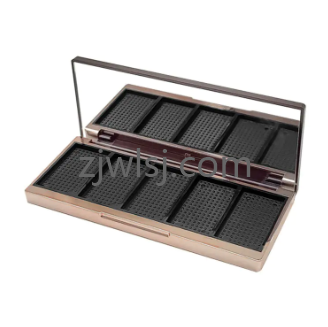
Cosmetic packaging is an important part of product development because it influences protection, usability, and brand presentation. In the color cosmetics market, an Eyeshadow Palette needs to combine an attractive appearance with a practical internal structure and reliable manufacturing quality. Its design should accommodate different makeup shades while providing convenient access and suitable protection during storage, transportation, and daily use. For cosmetic brands, packaging development is therefore closely connected with product positioning and the overall consumer experience.
Material selection is one of the first considerations when developing a cosmetic palette. Plastic is widely used because it supports flexible shapes, varied structures, and different surface finishes. Depending on the design, manufacturers can evaluate material characteristics such as rigidity, impact resistance, transparency, and processing suitability. These properties influence the appearance and performance of the finished case. The selected material should also be compatible with the intended molding process and the requirements of the packaging structure.
Injection molding technology makes it possible to produce cosmetic cases with detailed shapes and functional components. Mold design influences the dimensions, surface quality, and consistency of the lid, base, internal tray, and connecting structures. During tooling development, manufacturers need to consider material flow, cooling behavior, wall thickness, and dimensional stability. Proper mold engineering can help reduce defects such as uneven surfaces, deformation, and inconsistent component fitting.
The internal layout is particularly important for multi-shade makeup products. An Eyeshadow Palette may contain several compartments arranged according to the intended shade combination and product concept. Each compartment needs to accommodate the corresponding powder pan or insert while maintaining an organized appearance. The internal structure should also allow consumers to access individual shades conveniently. Depending on the design, additional features such as mirrors or applicator storage may be incorporated to improve functionality.
Closure performance directly affects the user experience. The lid, hinge, and locking structure should work together to provide convenient opening and secure closing. If these components are not properly coordinated, the case may become difficult to operate or may open unintentionally during transportation. Manufacturers should evaluate the connection between the lid and base during product development, paying attention to component alignment and assembly consistency.
Surface decoration helps cosmetic brands establish a distinctive visual identity. Printing, coating, metallic effects, and other finishing techniques can create different appearances according to brand positioning. Some collections may require a clean and understated design, while others may use decorative details to create a more expressive presentation. The selected finishing process should be suitable for the material and container structure. Color consistency, coating adhesion, and surface condition are also important quality considerations.
Manufacturing quality depends on coordination across multiple production stages. Raw material inspection helps confirm that incoming materials meet project requirements. During molding, process monitoring can identify variations that may affect component dimensions or appearance. After decoration and assembly, finished products can be evaluated for surface defects, color differences, closure operation, and structural condition. These checks help maintain consistent packaging quality across production batches.
Customization is an important requirement for many cosmetic brands. Buyers may request different case shapes, colors, internal arrangements, logo placement, and decorative finishes. These elements need to be considered together because a change in the external design may affect mold development, material selection, or assembly procedures. Early communication between the brand and packaging manufacturer helps clarify design expectations and establish a practical production plan.
Packaging efficiency also deserves attention. Cosmetic cases need to be protected during storage and transportation, and their components should support efficient assembly and packing. Appropriate structural design can help reduce unnecessary material use while maintaining the protection required for the product. Manufacturers should consider the complete supply process rather than focusing exclusively on the appearance of the finished case.
The development of cosmetic palettes involves material engineering, mold design, functional structure, surface treatment, and quality management. Combining these elements helps brands create packaging that supports product presentation and practical use. For related cosmetic packaging options and manufacturing information, explore WEILI PLASTIC at https://www.zjwlsj.com/product/eye-shadow-palette/shadow-palette-1-grid/.